
Waterline Repair in Sulphur Springs, TX and surrounding counties
Most people never think about the pipe that brings water into their house until it stops doing its job. When that buried line cracks, separates at a joint, or gets punctured, the water keeps flowing, just not to where it should go. Waterford Plumbing handles waterline repair in Sulphur Springs as one of the plumbing services Waterford Plumbing offers in Sulphur Springs, from finding where the line is leaking to putting the yard back over a sound pipe.
Suspect a leak? Shut off the main if water is surfacing, then call.
Additions and Conversions
Kitchens
Which Pipe Counts as the Waterline
The waterline is the underground service pipe between the water meter and the point where water enters the house. In most systems, the utility or water supply corporation owns everything up to and including the meter, and the property owner is responsible for the pipe on the house side of it. That is the section this page covers.
On a lot in town, that run might be 30 or 40 feet. On a country property, the meter can sit at the road with the house several hundred feet back, which means far more pipe in the ground and more places for something to go wrong.

Checking for a Leak Before You Dig
The water meter is the simplest leak detector most homeowners have. Turn off every faucet, appliance, and irrigation zone, then open the meter box and look at the dial. Most meters have a small triangle or star-shaped flow indicator. If it turns while nothing in the house is using water, water is going somewhere it should not.
Other clues tend to show up outside. A strip of grass that stays green through a dry August, a patch of ground that squishes underfoot, muddy water rising near the meter box, or a faint hiss at the spot where the pipe enters the house all point toward the line. Inside, rusty or cloudy water after a period of normal use can mean dirt is being drawn in through a break.

What Makes Waterlines Fail
Ground movement is a common cause in this part of Texas, where clay soil cycles between wet and dry and shifts the pipe with it. Freezing is another. The February 2021 winter storm split exposed and shallow lines across the state, especially where the pipe rises out of the ground at the meter or along the foundation.
Material and age play a part too. Galvanized steel rusts through from the inside. Polybutylene tends to fail at its fittings. Older PVC joints can loosen over decades. Then there is accidental damage: a fence post auger, a trencher for a new electrical run, or a tree root that wraps around a line and crushes it as it grows.
How a Repair Typically Goes
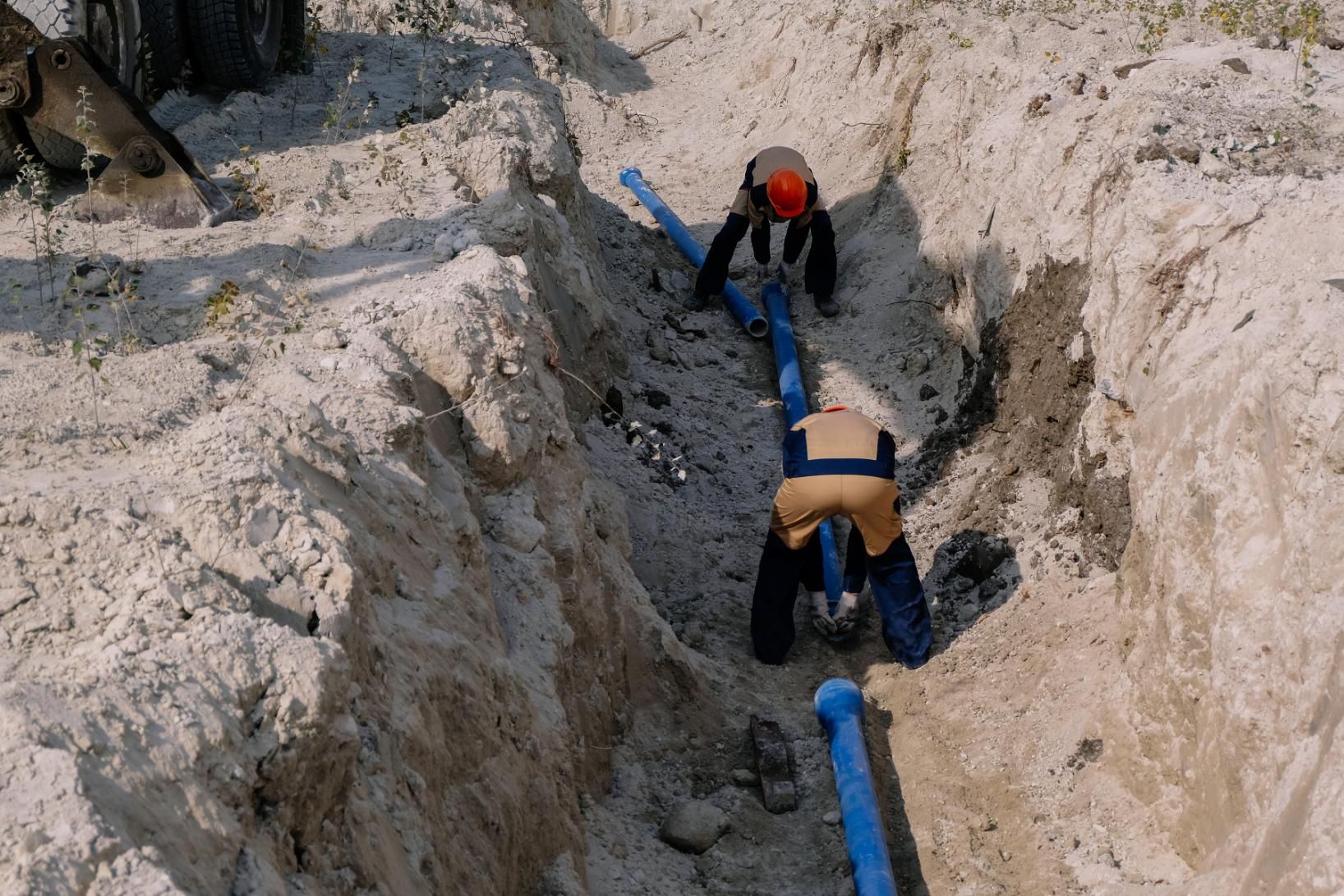
Once the leak location is narrowed down, the ground over it is dug out to expose the pipe. The damaged section is cut away and replaced with new pipe joined by repair couplings. With the line repaired, water is turned back on and the joints are checked under pressure before the hole is filled.
When the leak is pinned down accurately, the excavation stays small. When it is not, or when the line has failed in more than one place, more digging is involved.
Repair or Replace the Whole Line
One break on an otherwise sound line is a repair. A third leak in two years on old galvanized or polybutylene pipe usually means the rest of the line is close behind. At that point, a full waterline installation often costs less over time than chasing one failure after another.
If the leak turns out to be inside the house, under a sink or behind a water heater, that falls under
plumbing repairs inside the home instead.
Waterline Work Beyond the City Limits
Properties around Cumby, Como, and Mount Vernon often sit well back from the road, with long service lines running across pasture or wooded ground. The same checks apply: watch the meter, look for wet ground, and note where the line rises out of the soil.
Waterline Repair Questions
Who is responsible for repairing the waterline?
In most cases, the property owner is responsible for the pipe from the meter to the house, and the water provider is responsible for the meter and everything on the street side of it. If the leak is at the meter itself, call the water provider first.
How can I tell if my waterline is leaking?
Turn off all water use and watch the meter's flow indicator for a few minutes. You can also write down the meter reading, use no water for one to two hours, and read it again. Any change means water is moving through the meter.
Should I shut off the water if I think the line is broken?
If water is surfacing in the yard or pressure has dropped sharply, yes. Most homes have a shutoff valve where the line enters the house, and the meter box has a valve that can be closed with a meter key.
Can a waterline freeze in Texas?
Yes. The most exposed sections are where the pipe comes out of the ground at the meter and where it rises along the foundation to enter the house. Insulating those risers helps when temperatures drop into the teens.
Will the repair tear up my yard?
That depends on how precisely the leak can be located. A single break found accurately calls for a hole over that spot. Multiple leaks or an unclear location mean a longer trench, and replacing the full line means trenching its whole length.